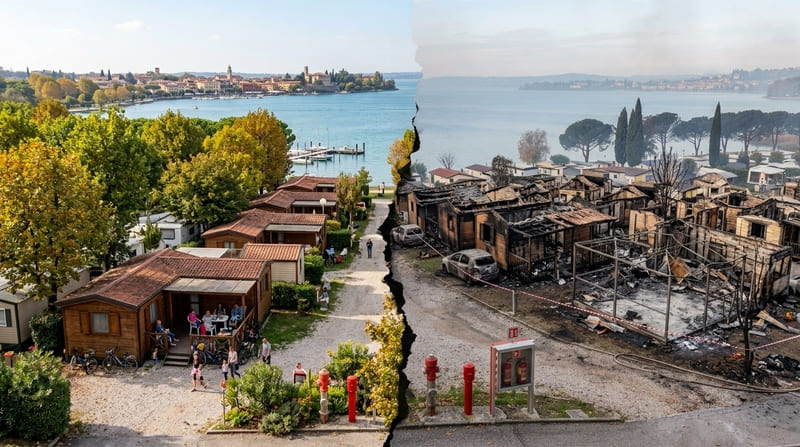
The Severe Fire at the Peschiera del Garda Campground
At dawn on October 4, 2026, a massive fire broke out at the well-known Bella Italia campground in Peschiera del Garda. The flames broke out suddenly in an area designated for accommodations and spread within minutes. The fire engulfed and destroyed about thirty mobile homes, also damaging several parked cars and RVs.


The thick column of black smoke was visible from kilometers away along the entire lakeshore. Numerous firefighting crews from Verona and nearby stations rushed to the scene. Firefighting and safety operations continued for several hours of intense work.
Possible causes of the fire and initial findings
Investigators and fire department experts immediately began an investigation to determine the cause of the disaster. According to initial reports, the fire may have been caused by a short circuit in an electrical system inside a bungalow. Another possibility being considered involves a malfunctioning stove or a gas leak from an LPG cylinder.


Unfortunately, the wooden structures and plastic materials in the outdoor seating areas accelerated the fire. The morning wind then helped the flames spread rapidly toward the adjacent accommodations. This tragic event demonstrates how urgent it is to improve safety at campgrounds through regular technical inspections.
Emergency Response and Assistance to the Injured
Emergency responders from 118 set up a first-aid station at the entrance to the tourist facility. A total of twenty-four people were treated by medical personnel for symptoms of smoke inhalation and burns. Some guests in more critical condition were rushed to Pederzoli Hospital for appropriate treatment.
The immediate activation of the campground’s emergency plan prevented even more tragic consequences for the hundreds of tourists. The evacuation efforts carried out by the staff saved many lives during the moments of panic.
Off-season: the key time for inspections and maintenance
The arrival of fall brings with it a drastic drop in occupancy rates and a decline in tourist traffic at accommodations. Operators should definitely take advantage of this off-season period to conduct thorough inspections of every facility. Without the pressure of customers, it becomes easier to inspect electrical systems, gas lines, and fire hydrants to ensure that safety standards at campsites are always up to date.
This time of year allows you to carry out complex structural work with complete peace of mind. Scheduling safety inspections during the quiet autumn months ensures that facilities are in perfect working order and have been thoroughly tested for the upcoming season. True safety at campgrounds is built precisely during the months when the campground is closed or operating at reduced capacity.
Key Risk Factors at Outdoor Campgrounds
Modern campgrounds welcome thousands of guests each year to shared spaces filled with vegetation and greenery. The close proximity of bungalows, RVs, and cars creates a high concentration of combustible materials in confined areas. The daily presence of gas cylinders and outdoor electrical outlets requires continuous monitoring.
Raising the standard of protection means creating wide firebreaks between the various areas of the facility. Intelligent spatial design prevents flames from spreading from one section of the village to another.
Current Regulations and Fire Prevention for the Future
All outdoor hospitality facilities are required to comply with strict fire prevention and planning regulations. The presence of functional fire hydrants and fire extinguishers distributed along the walkways is a mandatory legal requirement. Operators must also periodically inspect the integrity of electrical wiring and gas supply systems.
Training staff in first-response procedures and the use of fire hoses is crucial. The installation of wireless smoke detectors now provides an indispensable technological safeguard.
A Culture of Safety Among Campers
Campers must also develop a strong awareness of risks and proper behavior. Open fires must never be lit, nor should camping stoves be used near flammable fabrics or structures. Escape routes and walkways must never be blocked by vehicles or equipment.
Checking the map of assembly points right away helps you find your way more easily during an emergency. Full cooperation between campers and crew members makes outdoor vacations a truly safe experience.
© Riproduzione Riservata