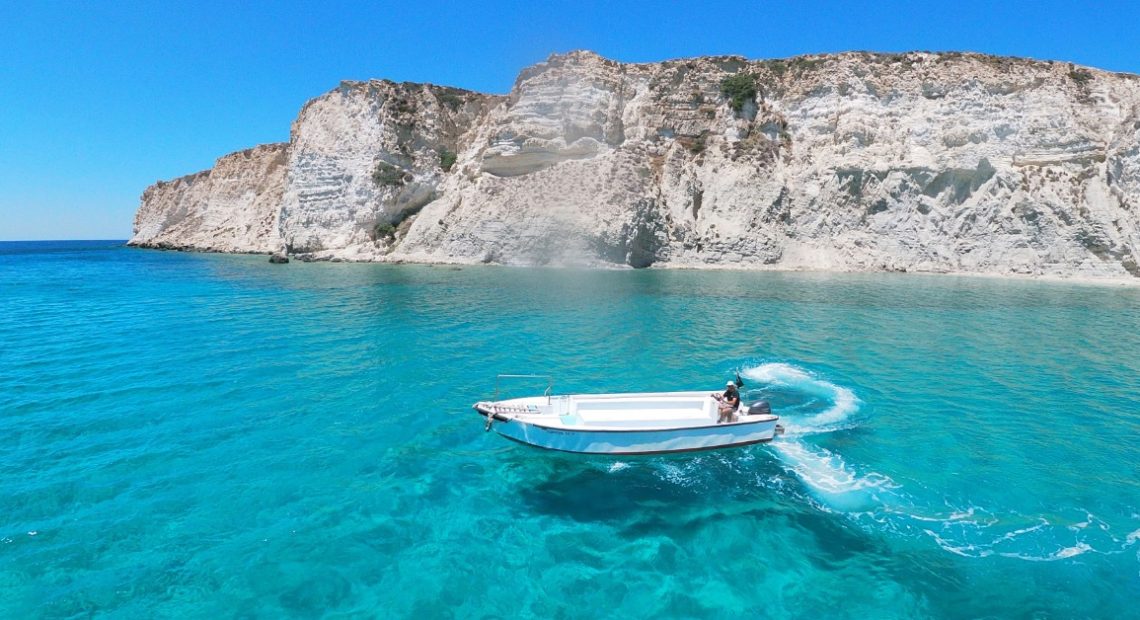
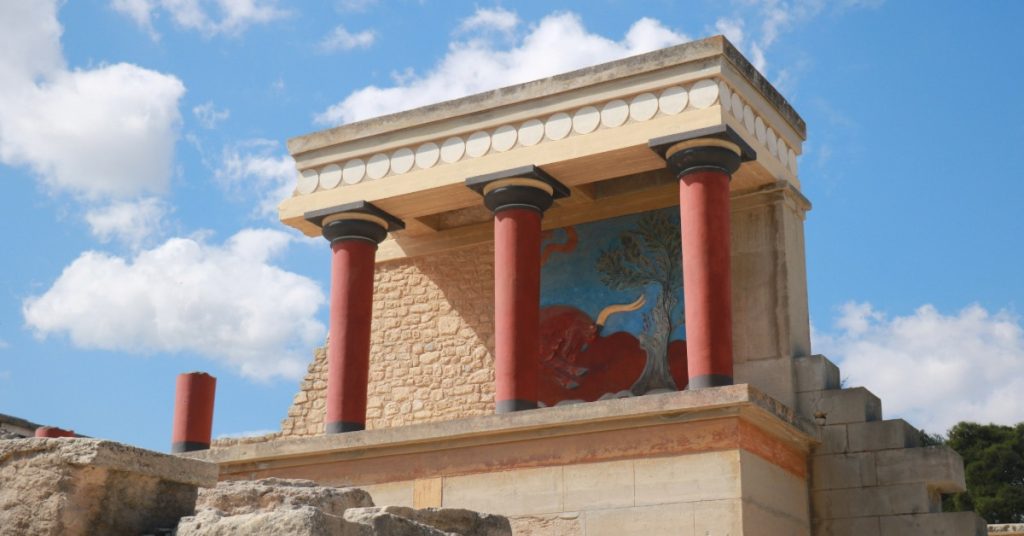
Greece’s largest island is thousands of years old. Crete is the cradle of Minoan civilization, where the stones of the Palace of Knossos still sprout, there where the Minotaur‘s labyrinth is said to have stood. At this landing in the Aegean Sea, extraordinary vestiges of antiquity mingle with fascinating legends: Zeus was born on the island, and Icarus took flight on wax wings, never mind the warm Mediterranean sun.


Crete is a succession of suggestions, but what always brings us back to reality are the relics of history. In the capital city of Heraklion, you can visit the archaeological museum where you can find the famous Phaistos disk, among the most enigmatic artifacts of ancient times, and numerous representations of “bullfighting” found in the palace of Knossos, a kind of athletic exercise practiced by young Cretans of antiquity riding a bull.
Another of the island’s certainties is the enchanting nature of land and sea. Some of its beaches are considered among the most beautiful in the entire Mediterranean, that of Elafonissi for example, located along the southwest coast, is known for the pink color of its sand, a peculiarity that is very rare in the world. This particular shade is given by the presence of infinitesimal traces of Miniacina miniacea, pinkish-shelled marine microorganisms which at the end of its life drop it on the seabed and with a play of currents it breaks up reaching the shoreline.

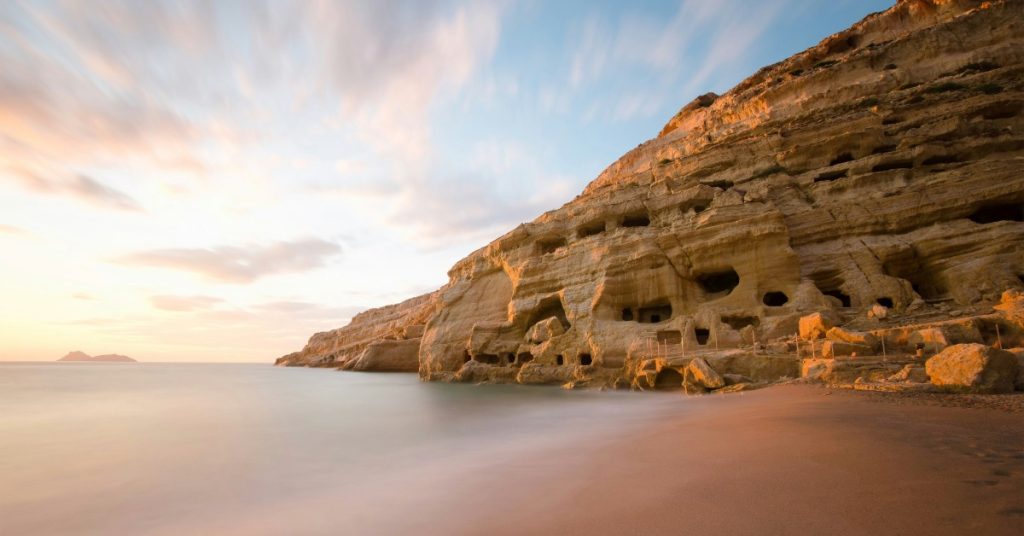
Also beautiful are the white beaches of Agios Nikolaos in the northeast, known as “PalmBeach,” framed by one of the largest palm groves in Europe, and Matala along the southern coast, the narrow bay framed by high cliffs, incredibly shaped by natural caves. Over the millennia, life has nested in these small ravines: in the Neolithic period they were used as shelters, the Romans employed them as tombs, and Hippy communities in the 1960s turned them into homes. Today the bohemian atmosphere can be felt at the beautiful beach of Myrtos, in the western part of Lasithi province.
Crete is the ideal destination to enjoy an active outdoor vacation, not only to experience the crystal clear sea and beaches, here you can also take exciting trekking routes and discover a hinterland characterized by wild mountains carved by deep canyons in the rock. Spectacular and impressive are the Samaria Gorge, one of the Europe’s longest canyon of no less than 16 km, which stretches Along the western slope of the Lefka Ori.
Finally, a stay in Crete cannot be said to be complete until you taste the traditional recipes, starting with a nice plate of Ajinosalata, the typical salad made with sea urchins, perhaps accompanied by Tzatziki, a creamy mixture of yoghurt, cucumbers and garlic, and ending with a serving of Loukoumades, honey sweets, a very renowned product on the island. Greek cuisine is another incredible reality of the island.
Camping in Crete
The best way to experience an authentic vacation in Crete is to stay outdoors. On the island, as in all of Greece, free camping is not allowed, nor is free standing on private property and bivouacking. Violations are punished with hefty fines, and the rule applies to tents but also to RVs and all forms of camping.
There are 14 camping facilities on the island, which belong to the Panhellenic Camping Association , the representative body for legal campsites operating in Greece. The association’s main objective is to promote Greek campsites and defend the interests of the camping industry through representation to Greek and European authorities. Consult their website to safely choose your camping facility or facilities where you would like to stay.
© Riproduzione Riservata