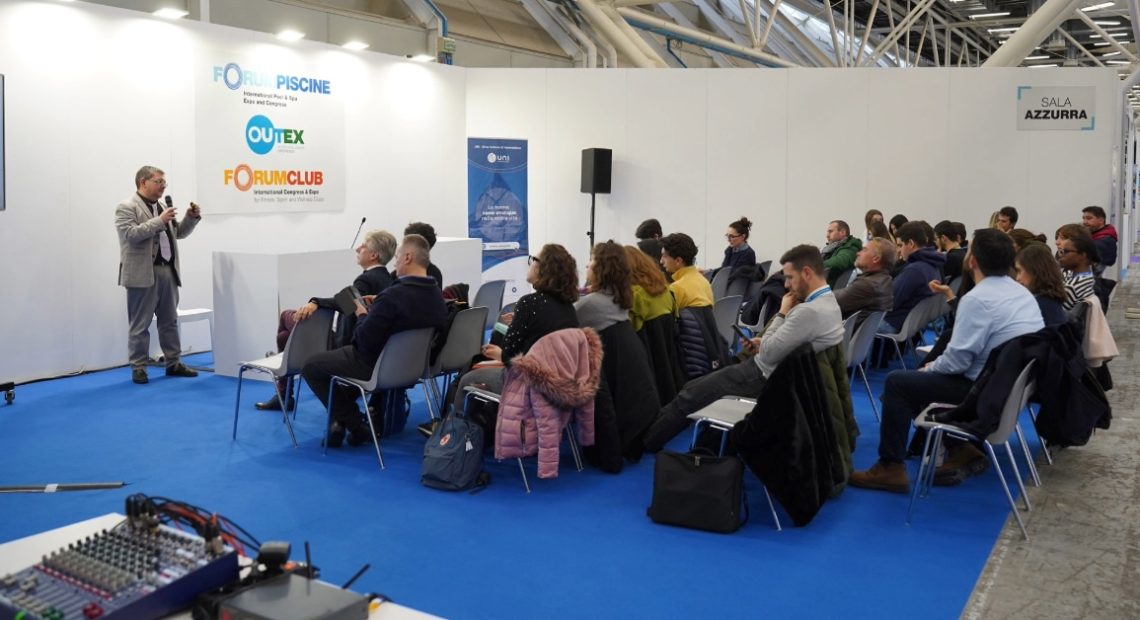
The International Exhibition for Swimming Pools and Spas was held last Feb. 12-14, fitting into the broader format of XLeisure – the sport & recreation factory, which also hosted within it Outex – Outdoor Experience and ForumClub, the B2B event for fitness clubs, sports centers and wellness areas. Among the most anticipated events at ForumPiscine, was the conference “Safe Swimming Pools,” with the participation of theIstituto Superiore di Sanità, which covered key aspects such as sanitation and anti-drowning aspects, again with an integrated view between legal regulations, technical standards and good management practices. A very important update that affects all activities that include a pool area, including camping facilities.


The debate provided an opportunity to take stock of the situation: after the silence of the last few months, there was a return to the long-awaited regulatory measure on swimming pools, focusing on the most critical aspects of the legislative process. With the Istituto Superiore di Sanità, the discussion returned to the decree that is to recompose the current legislative puzzle on swimming pools, between the dated 2003 State-Regions Agreement and the various regional regulations issued in subsequent years.
Masterfully directing the panel were experts in the field whose specific expertise illuminated the topic related to safety from different perspectives. Present at the panel discussion were Federica Nigro di Gregorio (National Center for Water Safety of theIstituto Superiore di Sanità), Rossana Prola (representing UNI – Ente Italiano di normazione), and Massimo Gaiani ( UNPISI Prevention Technician).


Moderating the discussion was Vincenzo Romano Spica, Full Professor of Hygiene and Public Health at the University of Rome “Foro Italico,” who highlighted the importance of this meeting, at a delicate and complex phase of regulatory updating.
“Safe pools,” focuses, news and upcoming goals
The premise of the discussion was to emphasize the need for regulations that give not only clear rules for all categories of aquatic facilities, but also uniform rules throughout the country.
Federica Nigro Di Gregorio, emphasized, “There is an urgent need for a regulatory update that is not limited to condominium and domestic swimming pools, but includes all types of facilities, including public swimming pools, water or theme parks, and pools attached to tourist-accommodation facilities or sports centers, facilities that have a higher potential of exposed individuals and a larger risk scenario.“
During the “Safe Swimming Pools” conference, the main innovations included in the current proposal compared to the previous legislation were also presented, from checklists of chemical-physical and microbiological parameters to the possibility of using different supply waters, to rules for pools fed with seawater, and highlights how theanalysis of hygienic and sanitary risks for all types of swimming pools is an element of evaluation in the current decree of law under discussion.
The ISS representative also shared with the speakers at the table and the audience other issues in the current debate on the decree. These included the role of lifeguards,facility adaptation, and the function of anti-drowning devices and technologies, a topic on which Rossana Prola brought further insight in light of the work of a working group focused on artificial intelligence-based detection and alarm systems to support the activities of lifeguards.
Prola, after reiterating the “desperate need” for the new regulatory device to get out of the current chaos situation, reviewed the technical standards dedicated to swimming pools, highlighting both the role and importance of these tools that flank the national legal standards, with a much more practical and operational slant, and the lack of knowledge on the part of the operators themselves. With the exception of the best-known and most applied standard UNI 10637, which deals with the installations of swimming pools for public use, revised in February 2024.
The moderator, Vincenzo Romano Spica, focused on Italy’s prestigious tradition in lifesaving and on the training of exercise science graduates, including for the proper management of the safety of swimming facilities, including lifesaving. Massimo Gaiani ‘s talk brought the focus back to the need for a comprehensive view of facility safety, which includes public hygiene, but also occupational safety and management, through the identification of tools and procedures adapted to the characteristics and organizational complexity of each individual facility, and verified over time. Because safety begins when you enter the pool.
© Riproduzione Riservata